Skip to content

Monitor Lizards

Lumpini Park's Resident Monitor Lizards

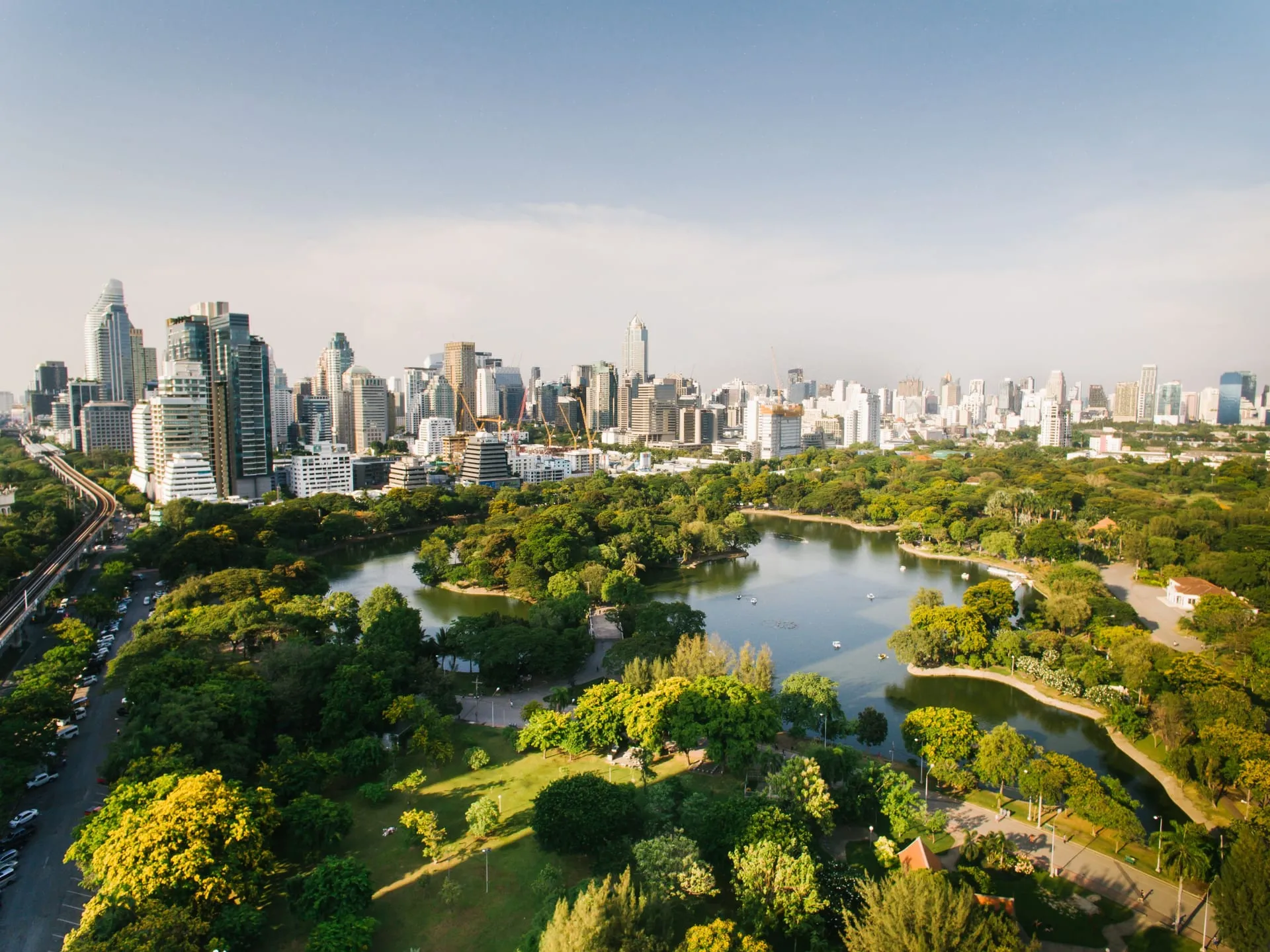
Lumpini Park is famous for its population of free-roaming monitor lizards, specifically the Asian water monitor (Varanus salvator). As the world's second-largest lizard species, hundreds of these semi-aquatic reptiles live freely around the park's lakes, basking on the lawns, climbing trees, and serving as vital ecological scavengers.

Monitor Lizard Fast Facts

Scientific NameVaranus salvator
Common NameAsian Water Monitor (ตัวเงินตัวทอง)
Average Length1.5 to 2.0 meters (5.0 to 6.6 feet)
Maximum LengthUp to 3 meters (10 feet)
Average Weight10 to 20 kg (22 to 44 lbs)
Maximum WeightUp to 50 kg (110 lbs) in captivity
Lifespan10 to 15 years in the wild
Clutch Size15 to 30 eggs (laid in burrows or hollow trees)
Diet in ParkFish, turtles, birds, rodents, carrion
Legal StatusProtected Category (Wild Animal Conservation Act)
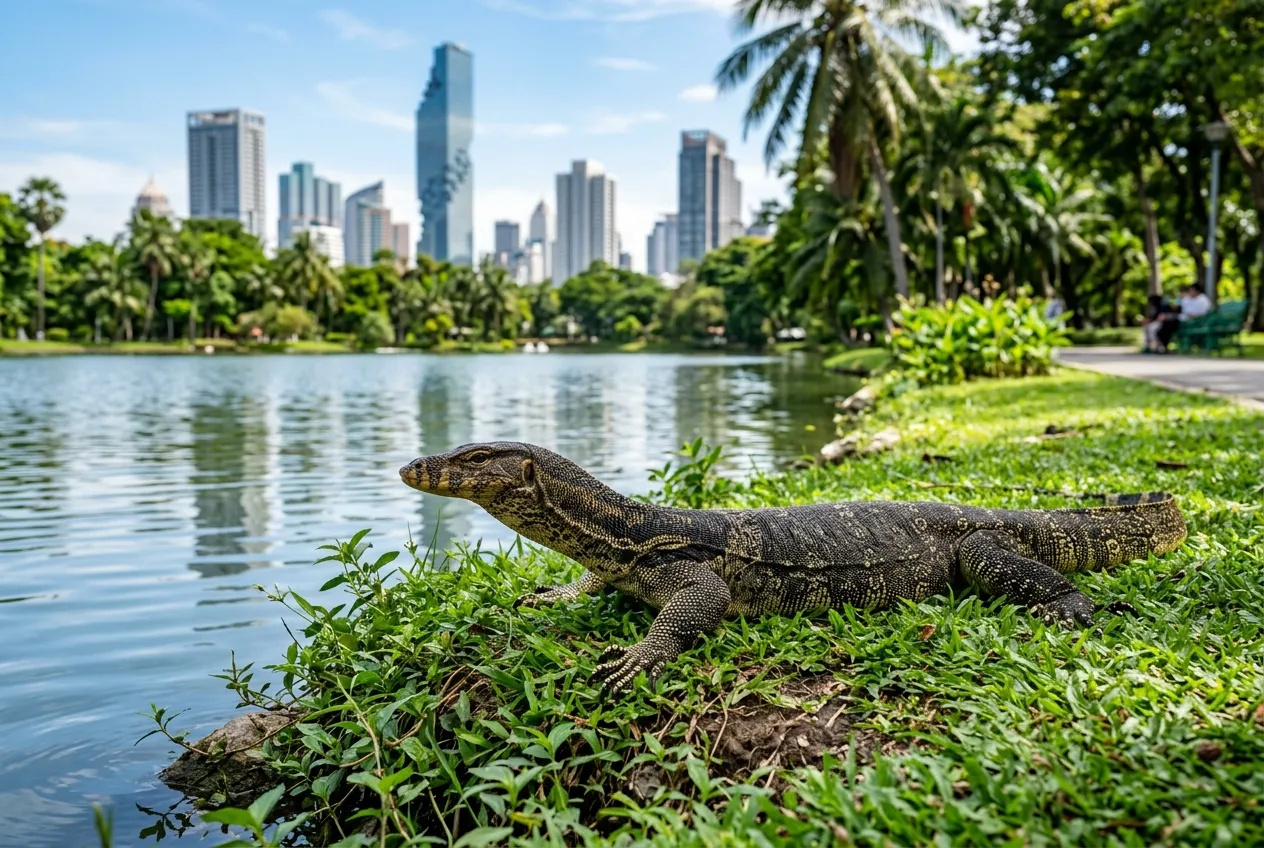
Asian water monitor lizard basking on the grass next to the lake in Lumpini Park with Bangkok skyscrapers in the background
Varanus salvator

Monitor Lizards: Bangkok's Urban Giants

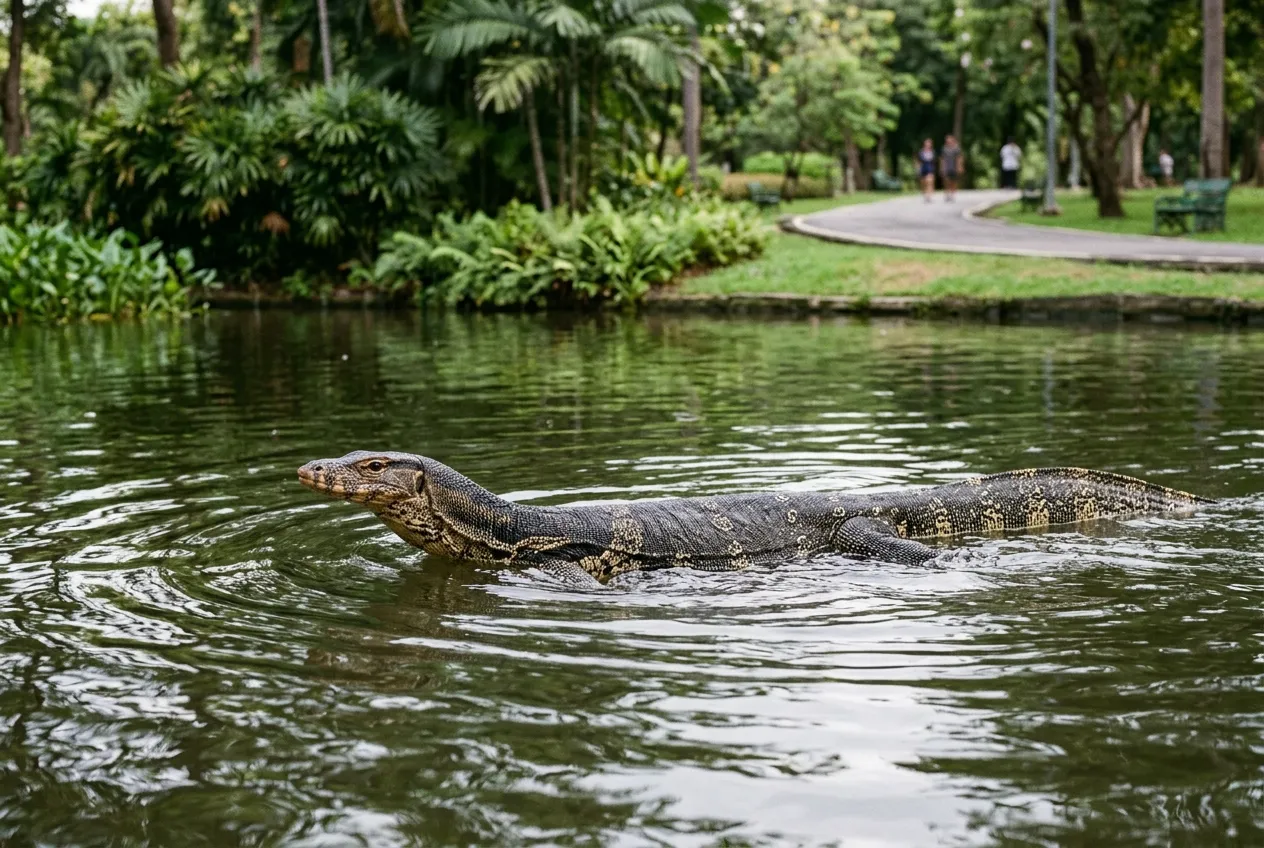
While their large size can be intimidating, the monitor lizards in Lumpini Park are accustomed to humans and rarely behave aggressively unless provoked. As cold-blooded reptiles, they spend the early mornings lying on canal banks or asphalt paths to regulate their body temperature. These skilled swimmers use their long, flattened tails as rudders and can stay underwater for up to 30 minutes. They are also adept climbers, often scaling tall trees to seek food or escape threats.

The Ecological Role of Monitor Lizards

As carnivores and active scavengers, these monitor lizards play a crucial role in maintaining Lumpini Park's health. Their diet includes catfish, pigeons, turtles, and animal carcasses. By consuming organic waste and dead fish, the Asian water monitors prevent water contamination and naturally control rodent populations, occupying the top of the park's urban food chain.

Asian water monitor lizard swimming in a canal at Lumpini Park Bangkok
Semi-aquatic behavior

Monitor Lizard Population & Relocation

With an abundant food supply and no natural predators in the park, the monitor lizard population can grow rapidly. In 2016, the Bangkok Metropolitan Administration (BMA) relocated over 100 lizards to a wildlife breeding center in Ratchaburi following complaints of path damage and minor bicycle collisions. Today, park rangers actively monitor the population, which has rebounded to around 400 lizards.
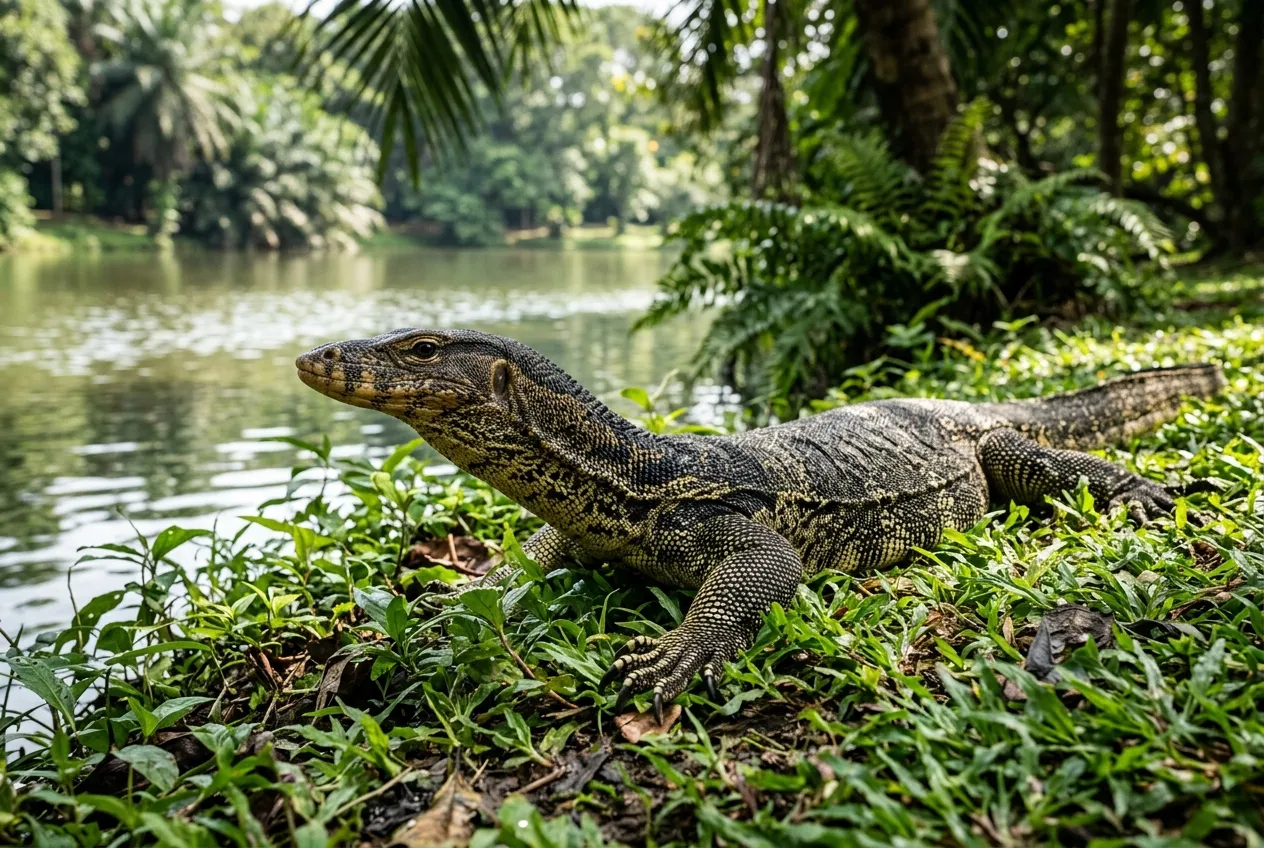
Asian water monitor lizard resting near a pond in Lumpini Park
Tua Ngoen Tua Thong

Thai Culture and the Monitor Lizard (Hia)

The monitor lizard has a dual reputation in Thai culture. Its formal Thai name, 'hia' (เหี้ย), is traditionally associated with bad luck and used as a strong swear word. To combat this stigma, locals refer to them as 'tua ngoen tua thong' (silver and gold creatures). Despite the cultural superstition, the Asian water monitor is officially protected under Thailand's Wild Animal Conservation and Protection Act, making it illegal to harm or kill them.

Safety guidelines

How to safely observe the lizards

Water monitors are wild animals. They are not aggressive toward humans under normal circumstances, but they will defend themselves if they feel threatened. Follow these simple rules to ensure a safe visit.

01

Keep your distance

Stay at least 2 to 3 meters away from the lizards. Do not try to touch, pet, or pose closely with them.

02

Do not feed them

Feeding the lizards is strictly banned. Human food is bad for their health, and regular feeding makes them lose their fear of humans, leading to begging behavior.

03

Never corner a lizard

Always leave an open escape route, especially toward the water. If startled, a lizard will run directly toward the lake and may knock down anything in its path.

04

Watch your step

Lizards often cross the running and cycling tracks or lie on the asphalt to warm up. Cyclists and runners should remain alert, particularly around bends.

05

Seek medical help if bitten

While bites are rare, monitor lizards have sharp teeth and bacteria in their saliva. If bitten, wash the wound with soap and water immediately and seek prompt medical attention.

Frequently asked questions

Answers to common questions about Lumpini Park's monitor lizards.

Q: Are the lizards in Lumpini Park Komodo dragons?

No. The lizards in Lumpini Park are Asian water monitors. Komodo dragons are a different species native to Indonesia. They are larger, hunt large mammals, and have venom. There are no Komodo dragons in Thailand.

Q: Are water monitors dangerous or venomous?

They produce only a mild venom, not dangerous to humans, but their mouths harbor bacteria that can cause severe infections if a bite occurs. They generally run away from humans. They will only attack with their tail, claws, or teeth if they are provoked, cornered, or handled.

Q: What should I do if a lizard is blocking the path?

Do not try to push or scare it. Give it space and walk around it. The lizard will eventually return to the water on its own.

Q: Is it illegal to harm the lizards?

Yes. In Thailand, the Asian water monitor is a protected species under the Wild Animal Conservation and Protection Act. It is illegal to harm, capture, or kill them, and violators face fines or imprisonment.

Q: How many monitor lizards live in Lumpini Park?

The population has rebounded to around 400 lizards. The city government periodically counts them and relocates some to wildlife breeding centers in Ratchaburi if the population grows too large for the park's resources.