History
Saladaeng Field & the great fair
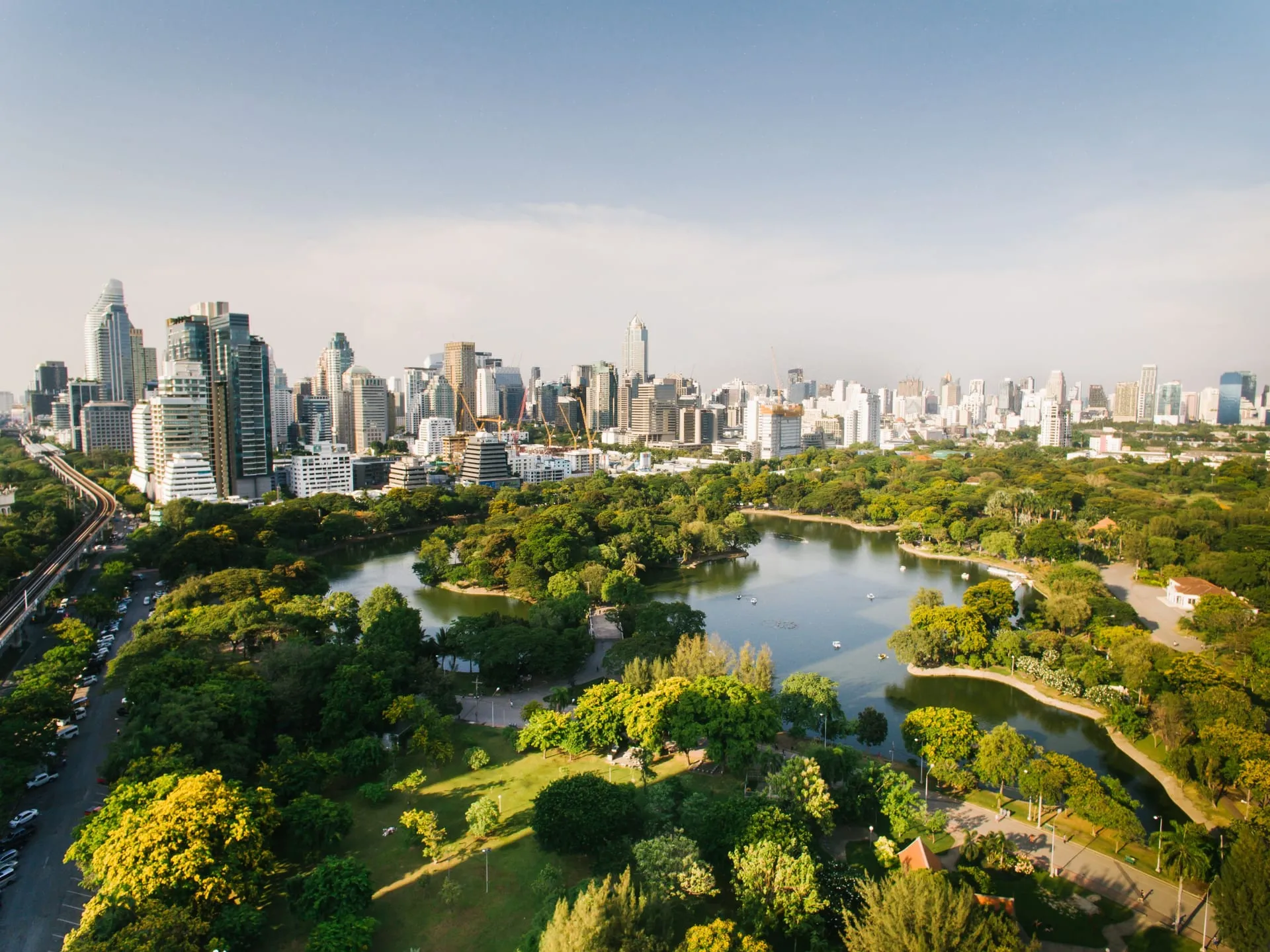
King Vajiravudh (Rama VI) donated the royal ‘Saladaeng Field’ to host the Siamrat Phiphitthaphan Trade Fair, an exhibition showcasing Siamese goods and industry. Although the King died before the park was finished, King Prajadhipok (Rama VII) completed the project. He dedicated the grounds as the country’s first public park and named it ‘Lumphini’ after Lumbini in Nepal, the birthplace of the Buddha. The Chinese-style clock tower built that year is still one of the park’s oldest landmarks.
WWII camp & monument
During World War II, the Japanese army used the park as a military camp. In 1942, the bronze statue of King Rama VI was put up at the main entrance to mark the park’s royal beginnings.
Birth of the Lumpinee Stadium
The park gave its name to the Lumpinee Boxing Stadium, which opened in December 1956 on Rama IV Road outside the gates. Run by the Royal Thai Army, it became the home of modern Muay Thai, where every fighter wanted to win a stadium title. The original arena hosted matches for almost sixty years before moving to Ram Inthra Road in 2014, but the name Lumpinee is still linked to the sport.
Music, reading & the floating restaurant
The Lumpini Public Library opened in 1956 as Bangkok's first public library, joined by the Youth Center for sports and recreation. In the 1960s, a floating restaurant shaped like a kinnari — a half-woman, half-bird figure from mythology — sat on the main lake. It drew crowds until a fire destroyed it in 1971. The Bangkok Symphony Orchestra, founded in 1982, later began the free Concert in the Park series on winter Sundays.
A census of the prehistoric residents
By the mid-2010s, the park had around 400 monitor lizards, which was one of the largest populations in any city. In 2016, park staff moved dozens of the lizards to other areas to keep the population under control. The story was covered by news outlets worldwide. Locals started calling the lizards Bangkok’s ‘little Godzillas,’ and they remain one of the park’s main attractions.
Renovations & resiliency
To prepare for the park’s 100th anniversary, the Bangkok Metropolitan Administration (BMA) started a major upgrade. The work includes improving drainage, adding natural wetlands to clean the lake water, widening walking lanes, and building shaded shelters. They also renovated the Green Bridge, an elevated walkway connecting Lumphini to Benjakitti Park, which reopened on 30 November 2025 (trial); full reopening May 2026.
Frequently asked questions about Lumpini Park's history
Find answers about the landmarks, origins, and key events in Lumpini Park's history.
Q: Why is it named Lumpini Park?
The park is named after Lumbini, the birthplace of the Buddha in Nepal. King Rama VI donated the royal Saladaeng Field in 1925, and his successor, King Rama VII, completed the project. He dedicated the space as Bangkok's first public park and chose the name to honor the Buddha's birthplace.
Q: What was Lumpini Park used for during World War II?
During World War II, the Japanese army occupied the park and turned the green space into a military camp. The park suffered damage during this period, but it was fully restored after the war. The bronze statue of King Rama VI was built at the entrance in 1942 while the camp was active.
Q: Was the original Lumpinee Boxing Stadium located inside the park?
No, the Lumpinee Muay Thai Stadium was never inside the park gates. It opened in 1956 on Rama IV Road, just outside the park boundary. The stadium took its name from the park and hosted legendary fights for nearly sixty years before relocating to Ram Inthra Road in 2014.
Q: What is the oldest structure still standing in Lumpini Park?
The Chinese-style clock tower, built in 1925 for the planned trade fair, is the oldest surviving structure. Designed by Italian architect Mario Tamagno, it stands near the southeast corner by Gate 3. It survived the World War II military occupation and remains a central landmark today.
Q: What renovations are happening for the park's 100th anniversary?
The BMA is marking the park's centennial in 2025 with a phased upgrade. Work includes new walkways, drainage, a redesigned playground and fitness zone, a renovated clock tower and public library, and a new Universal Design restroom. The Green Bridge to Benjakitti Park has already reopened. Centennial celebrations are scheduled for November 20 to 25, 2025, alongside the 100th anniversary of King Rama VI.